


What are artificial Christmas trees made of?
PE, PVC, combined needles, frame and stand: we analyze the composition of an artificial Christmas tree and explain what to check in the characteristics before buying.
Christmas Tree · Tips and Choices
What are artificial Christmas trees made of?
An artificial Christmas tree consists of several materials: polymer needles, a supporting structure, fasteners and a base. Most often, the buyer sees PE or PVC in the description, but these designations talk primarily about coniferous elements. To understand exactly what you are buying, you should separately check the composition of the crown, the structure of the branches and the complete set of the stand.
Let's break down the Christmas tree into its components and explain how to read the characteristics without complicated chemistry. This will help to ask the seller the right questions and choose a model that will be convenient to install, decorate and store.
What are the parts of an artificial Christmas tree?
Materials perform different tasks. Conifers create color, texture and outer contour. The branches hold the coniferous elements and make it possible to form the crown. The trunk connects the structure and the base holds the tree in place.
- Needles: molded polyethylene elements, cut PVC strips or a combination of different types.
- Branches and trunk: load-bearing parts and connection points, the material and structure of which depend on the model.
- Basis: a stand or a decorative pot with a structure fixed in it.
- Additional elements: decorative coating, built-in lighting or other details, if they are included in the package.
What does "100% cast" mean? Specify what exactly the manufacturer counts: all needle elements or only visible tips. The needle designation does not describe the material of the barrel, stand, or electrical wire.
What are the needles made of: PE, PVC and combined options
PE — polyethylene for cast coniferous elements
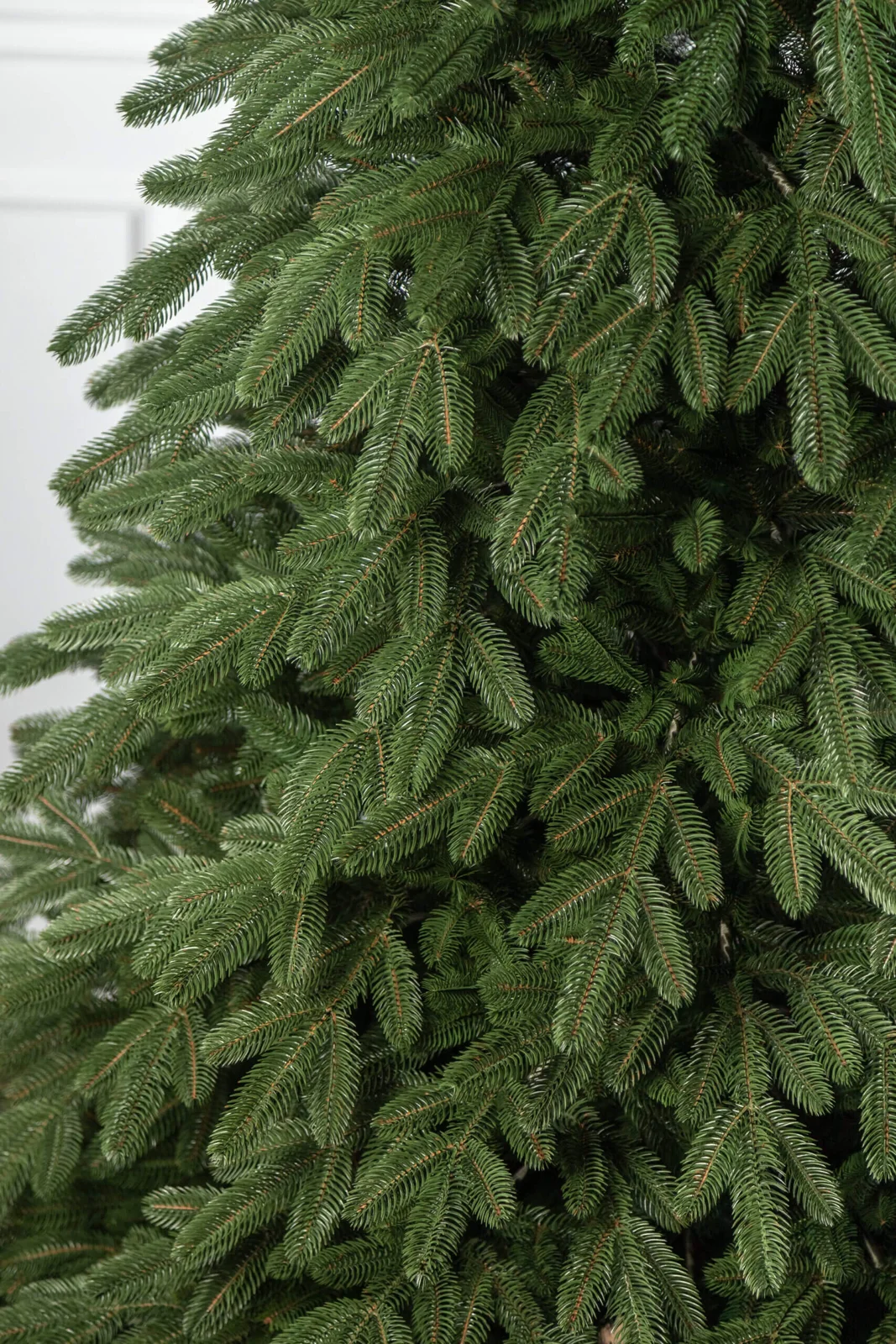
PE is short for polyethylene, i.e. polyethylene. Cast coniferous elements are formed in molds. This method allows you to get a voluminous branch with a distinct shape of needles.
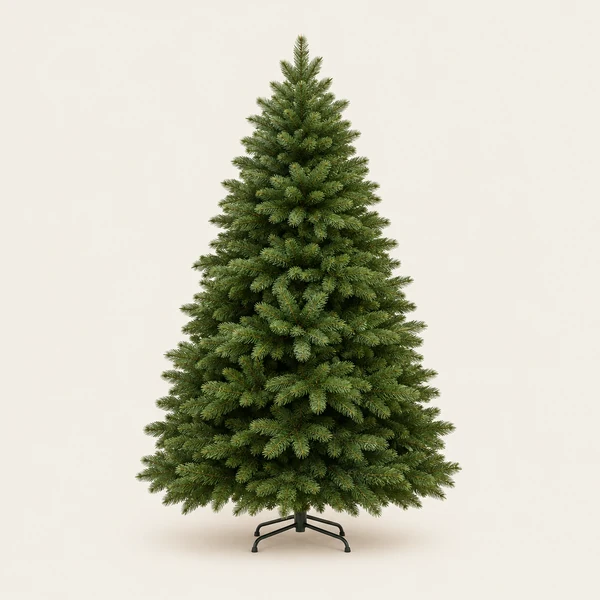
U Lapland green 180 cm specifically cast PE-needle is specified. When looking at the photo, pay attention to the individual leg, its relief and how the coniferous elements form the edge of the crown.
PVC is polyvinyl chloride
PVC, or PVC, is another polymer. A classic needle of this type is made of thin sheet material, cut into narrow strips and fixed on a wire. A separate needle is flat, so its appearance differs from a cast one up close.
Combined needles
PE and PVC can be combined in one Christmas tree. Therefore, the word "cast" in the short title should be checked with the full description. Ask about the composition of the crown and ask for a photo of not only the outer tips, but also the inner part of the branches.
Are there other materials?
Yes. For example, Balsam Hill reports using PET — polyethylene terephthalate — in some of its new products. This is an example of another solution on the market, not a Christmas Tree feature. The composition is always checked for a specific model.
If you need a more detailed comparison of exactly two common types of needles, read our article "What is the difference between a cast Christmas tree and a PVC one".
Christmas tree materials: a short table for the buyer
| part | What can be found | What to check before ordering |
|---|---|---|
| Needle | PE, PVC, their combination; in some manufacturers - PET | Full composition, close-up photo of twigs and from inside the crown |
| Supporting structure | Metal elements; the specific structure depends on the model | Connection of sections, fixing of branches, assembly instructions |
| Stand | In the full-size models of our catalog — in particular, metal | Does the kit include how to fix the trunk |
| Decorative pot | A separate base element | Material, dimensions, method of securing the tree |
| Covering and lighting | Snowfall, decorative details, LED kit - according to the model | Care rules and terms of use |
What are the branches and trunk made of?
Volumetric needles will not hold the tree by themselves: it needs a supporting structure. Metal trunks, branches and fasteners are used in artificial Christmas trees. But the material of the outer shell and the material inside the branch may differ, so you should not determine the entire structure only by the color of the surface.
It is important for the buyer to understand not only the name of the metal. See how the sections connect, whether the stand is installed clearly, and whether there are instructions for forming the crown. Ask which parts you need to connect yourself and which parts are already attached to the tree.
In the photo from the product card, evaluate the general appearance, and specify the assembly method according to the description and instructions. Do not try to disconnect the branch if its design does not allow it.
A stand and a pot are different formats of the base
A full-size tree is usually chosen together with a stand. For example, a metal stand is specified in the Lapland green 180 cm package. Before ordering another model, check its own kit list: the photo of the holiday arrangement may show additional decor.
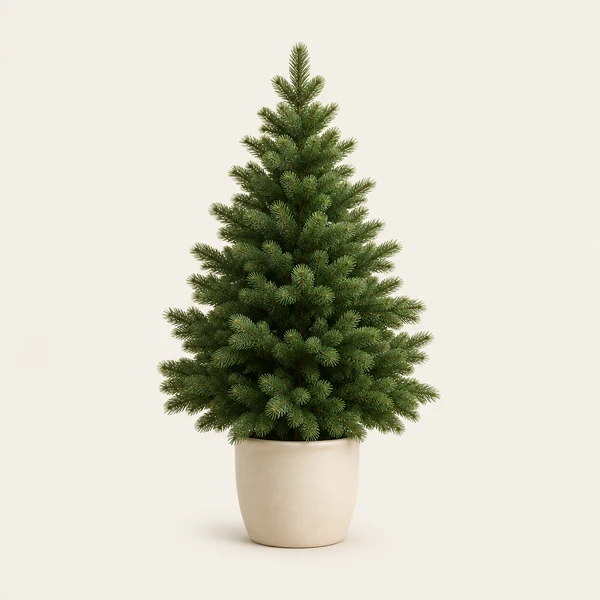
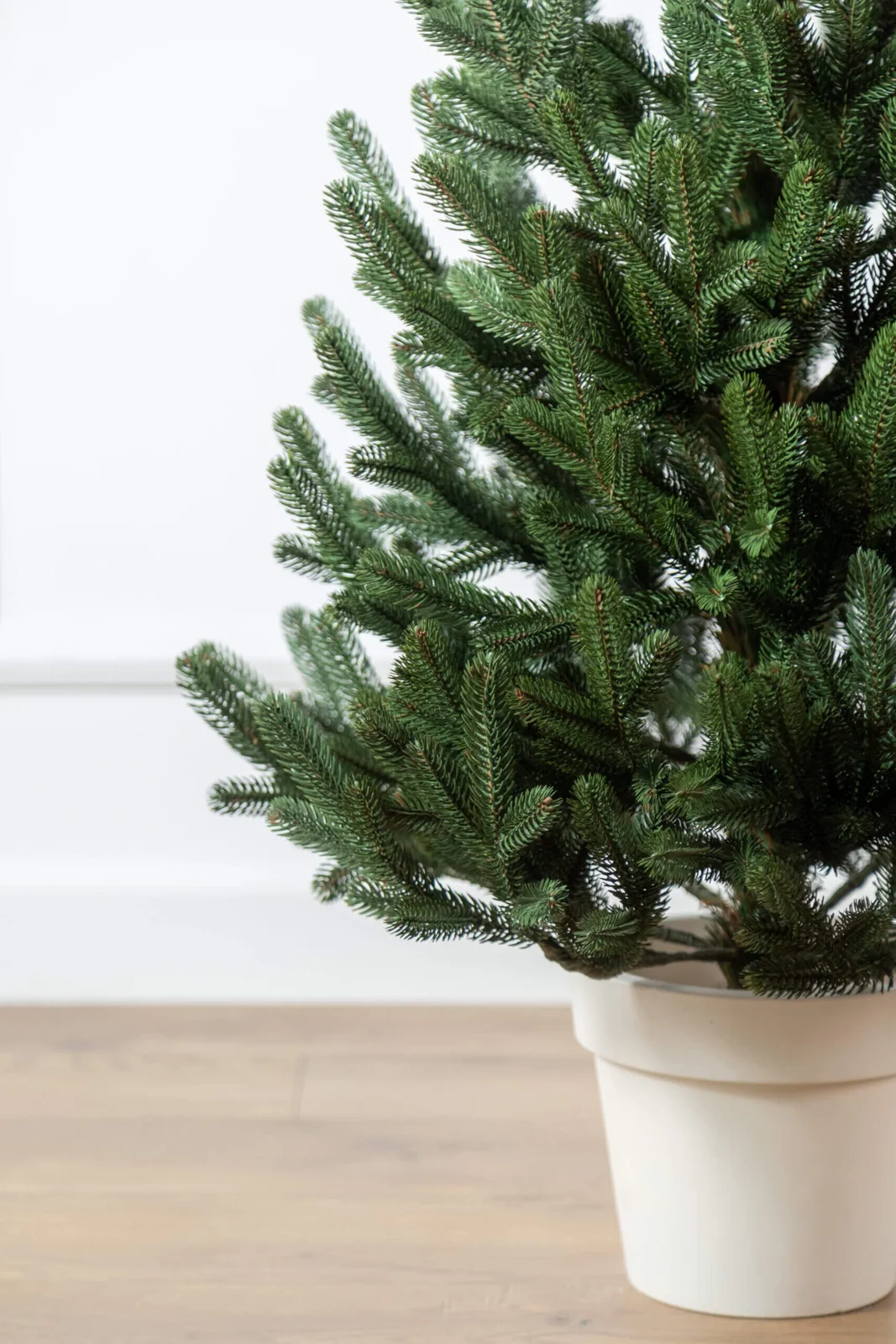
In a compact Vienna green 110 cm in a pot the decorative base is already part of the tree's appearance. This is an artificial Christmas tree, so the pot does not mean the presence of living roots and the need for watering.
The material of the pot itself should be specified separately. The color and texture in the photo do not make it possible to reliably determine its composition. Also compare the dimensions of the entire composition: the width of the crown and the width of the base are different parameters.
Which creates color and a snowy effect
Shade is another characteristic of the finished material. Additives and pigments help give polymers the desired properties and color. Therefore, the name of the base polymer does not describe the entire composition of the product and does not replace the manufacturer's information.
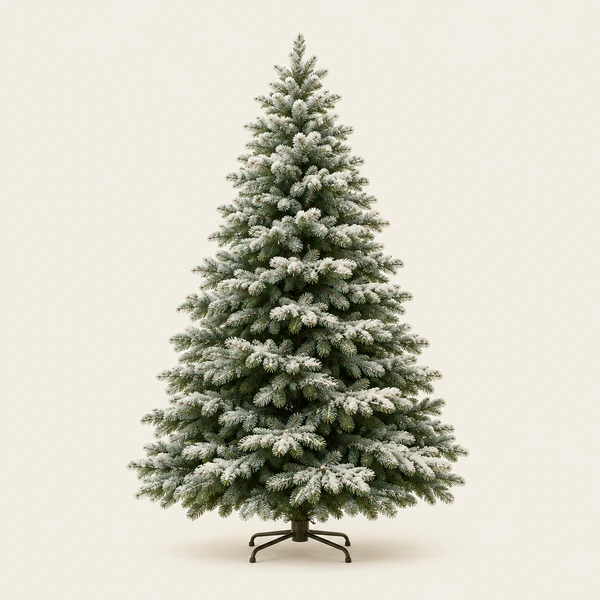
For a snowy Christmas tree, you need to separately check the type of needles and the features of the decorative coating. The word "snowy" tells about the design, but in itself does not indicate what the coniferous elements are made of. For such a model, its own cleaning and packaging instructions are especially important.
Do not infer color fastness just from the PE or PVC designation. Check whether the product is intended for indoor or outdoor use and what conditions of use the manufacturer recommends.
Does the material determine the quality of the Christmas tree?
The composition helps to understand the structure and appearance of the needles, but a good selection consists of several checks. Even if you like an individual branch, you need to evaluate the proportions of the whole tree, the joints and the base.
The name of the polymer is not a certificate of a specific Christmas tree. It does not in itself confirm the absence of odor, a certain service life or suitability for any conditions. If these characteristics are fundamental to you, ask for information about the selected model and available product documents.
In practice, start with the simple: are there clear photos, exact dimensions, a complete set and clear contact details of the seller? More criteria are collected in the article "How to distinguish a high-quality artificial Christmas tree".
What to ask the seller before buying
- What is the composition of needles? A specific answer is required: PE, PVC, combined needle or other material.
- Is there a close-up of the branch? Ask to see the outside and inside of the crown.
- What is included in the kit? Specify the stand or pot, packaging and additional accessories.
- How is the tree harvested? Check if the way you install and store the sections is convenient for you.
- What are the actual dimensions? Consider the height, maximum diameter, weight and dimensions of the box.
- How to care for this particular model? Especially if it has snow, decor or built-in light.
How materials affect preparation and storage
After the box, the crown must be formed. Do this gradually, starting from the bottom, and work with the branches as the instructions suggest. Density should not be judged only by freshly unpacked wood: legs folded for transportation do not yet show its final shape.
Before the first installation, see our guide how to assemble and fluff an artificial Christmas tree. For cleaning, choose the method allowed by the manufacturer: the material of the needles does not automatically give permission to wash the entire structure.
After the holidays, remove the decorations, prepare the tree for packing and store it in a dry place. Branches, covers and electrical elements require different handling, so it is useful to keep the instructions with the packaging. Details are in ours artificial Christmas tree storage guide.
Frequently asked questions about artificial Christmas tree materials
Is a cast Christmas tree a silicone Christmas tree?
It is not necessary to determine the composition by household name. In the cast models of our catalog, PE-needle is indicated - polyethylene. Focus on the characteristics of a specific product.
Can a cast Christmas tree contain PVC?
There are combined models on the market. The exact composition should be checked in the description or checked with the seller, especially if the name does not contain complete information.
Does the pot mean that the Christmas tree is alive?
No. In our catalog, this is a decorative base of an artificial model. Such a tree does not need to be watered or transplanted.
Is it enough to know the material to assess the durability of the tree?
No. Check the base, trunk fixation, assembly method and dimensions. Follow the model-specific instructions for installation.
Choose a Christmas tree according to its composition and appearance
Start with a needle that you like up close, then check the dimensions, fit and base. In the catalog green cast Christmas trees you can compare the photos and specifications of the models before ordering.
Technical sources
- Balsam Hill: manufacture of PE and PVC needles.
- Balsam Hill: Conifers and structural materials.
- VinylPlus: the role of additives in the properties of PVC.
Read also
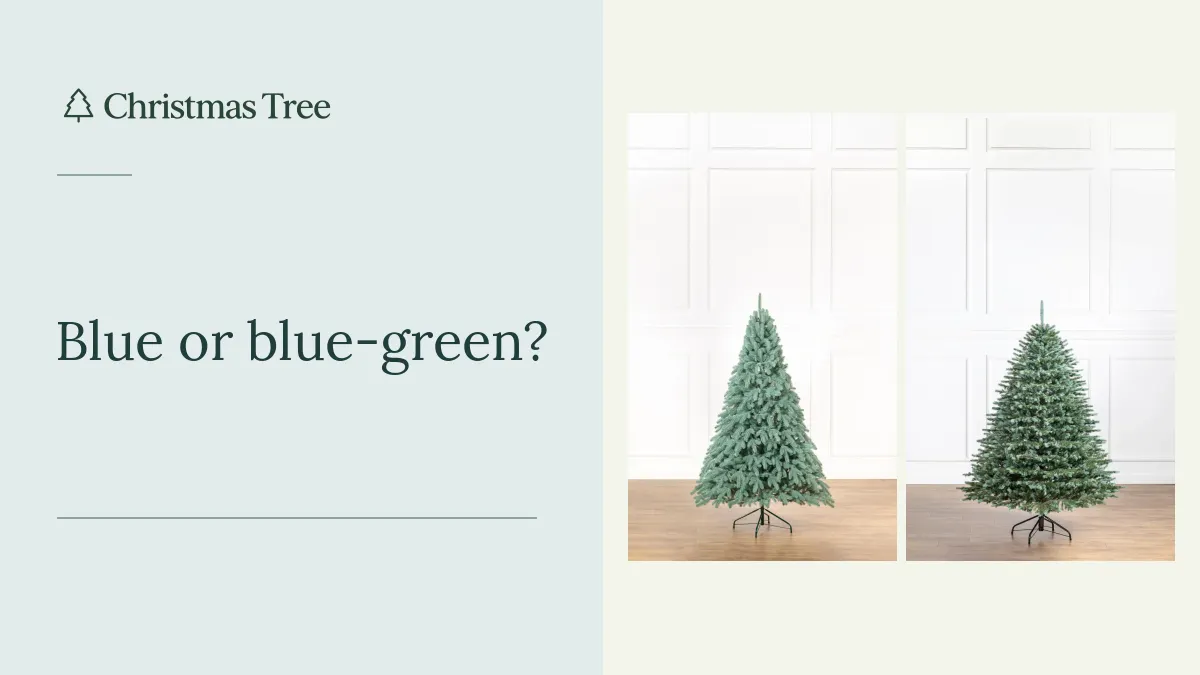
Blue or blue-green artificial Christmas tree? Three 1.8 m models compared
Blue Vienna, blue Lapland and blue-green Alaska share a height of 1.8 m but differ in width and packed weight. Compare their measurements,…
Read the story
How to unbox, shape and store a snow-flocked artificial Christmas tree
A practical guide from opening the carton to packing up after Christmas, with two real size examples, a tier-by-tier shaping method and tips…
Read the story
How to order an artificial Christmas tree for international delivery
Choose a model, check its packed dimensions and send a delivery inquiry with your town and country. Christmas Tree confirms the arrangements…
Read the story
