


How to identify moulded PE needles in Christmas tree photos
Learn which photos to enlarge, what PE and PVC look like on a branch, and how to confirm the material used throughout the tree you are considering.
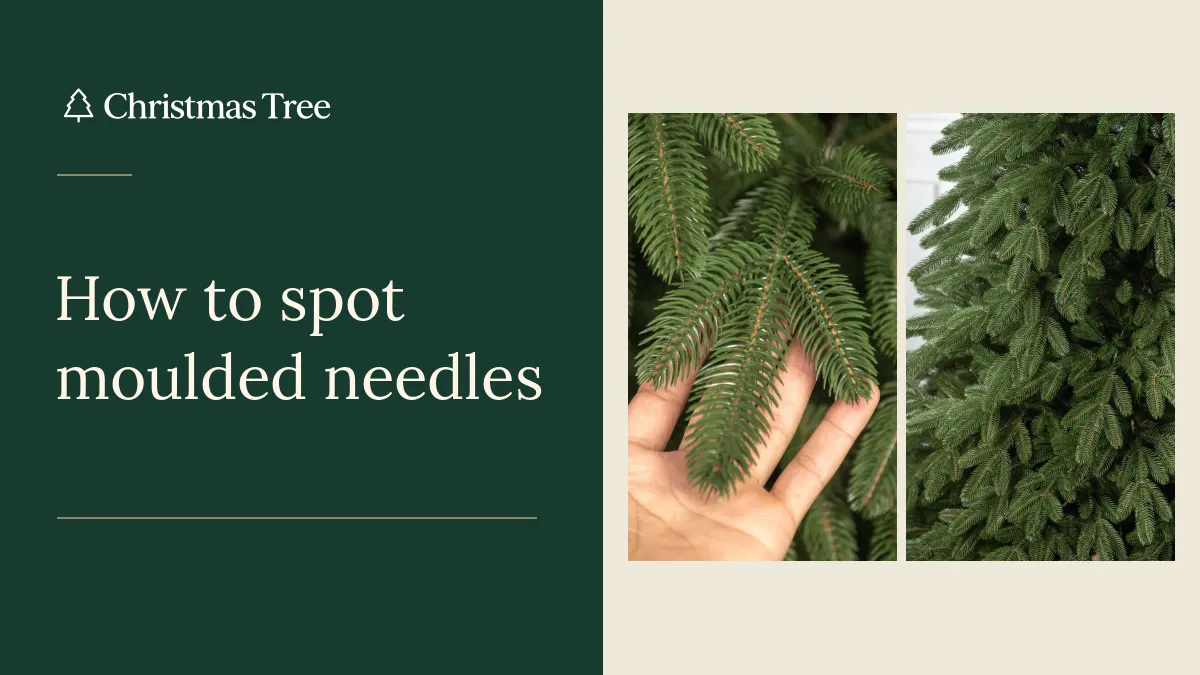
To identify moulded PE needles in an artificial Christmas tree photo, zoom in on a branch tip from the side. Moulded needles have a three-dimensional shape and project from the shoot at different angles. PVC film foliage often shows flat, narrow strips with thin edges. To check the material throughout the crown, compare the tip with the inner branches and read the specifications for the exact tree.
Start with three photos of the same tree
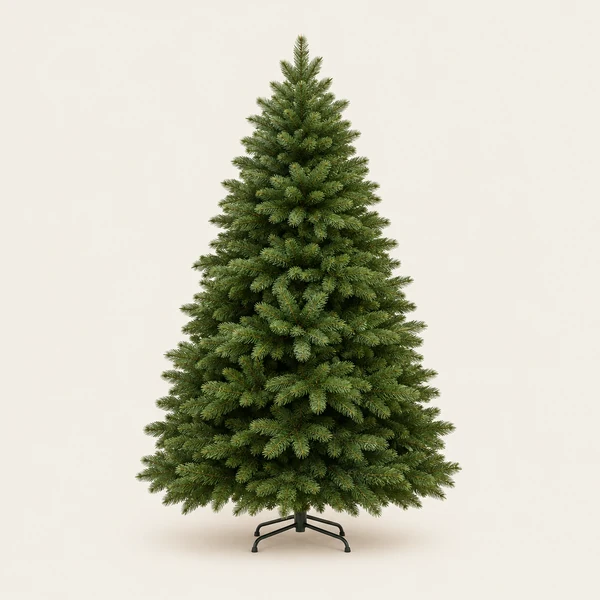
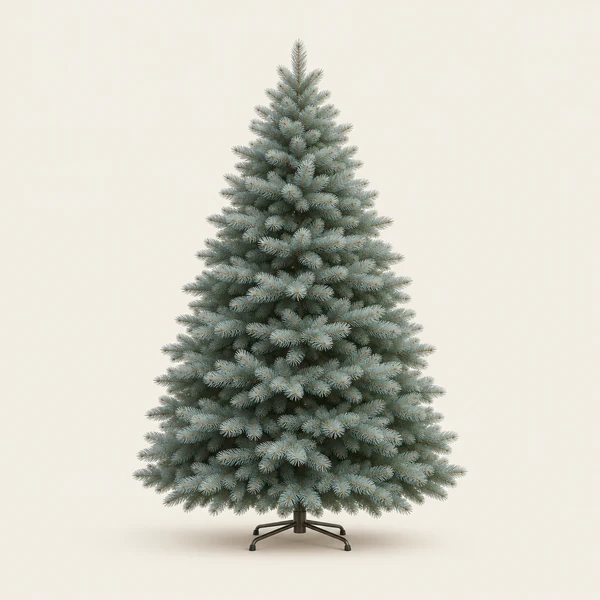
Use a full-length photograph first to find the main tiers and see the silhouette. You can compare width and branch spacing and work out which section you want to inspect. A gallery may share photos across heights and colours. Check which version is pictured, especially when you are comparing two products from the same range.
Next, open a close-up that shows the branch tip from a slight side angle. Look for the place where the needles meet the shoot. A clear side view shows how far the needles project and gives you an edge to inspect. In the 2.1 m green Lapland product listing, you can compare the gallery photographs with the needle material shown in the specifications.
Finally, find a picture looking between two tiers towards the trunk. If the gallery has one taken from slightly below, check the branches that sit behind the outer tips. A close-up of this area lets you compare the inner foliage with what you saw on the outside. When the crown is too dense to see inside, ask the store for a photo with a front branch held aside.
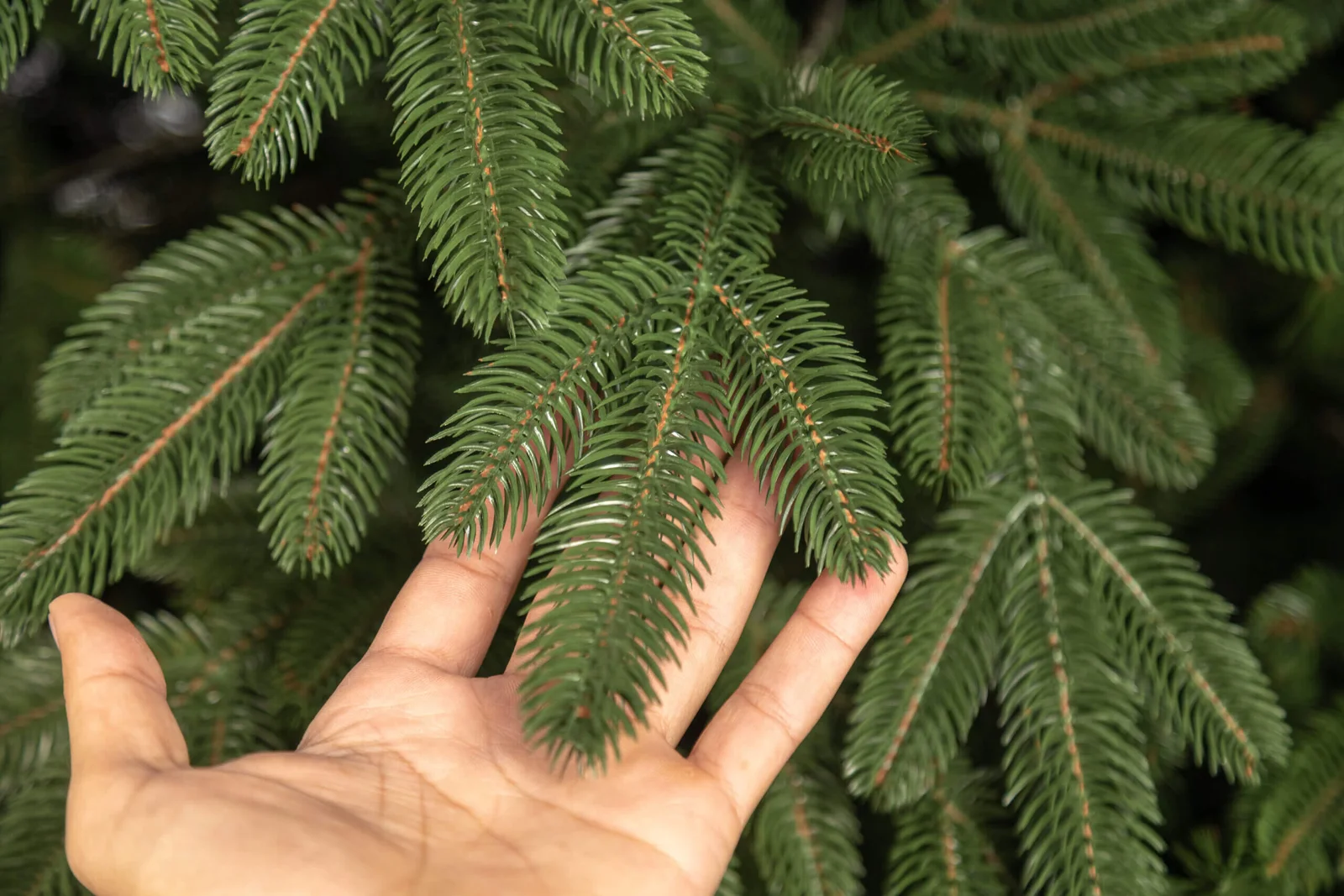
Look at shape, edges and the base of the shoot
- Shape. A moulded needle has visible thickness and contour. Look along the edge of the branch and notice how individual needles project away from the shoot.
- Edges. Cut PVC film can look like a row of narrow flat strips. A side angle helps you see the edge of a strip and how the material sits around the branch core.
- Base. Follow the branch from the tip towards the centre of the tree. You may see a change in the needle shape as the shoot meets the rest of the branch.
- Light and focus. Compare photos where the details are sharp and evenly lit. Reflections can hide a flat edge, while heavy shadows can obscure the connection to the shoot.
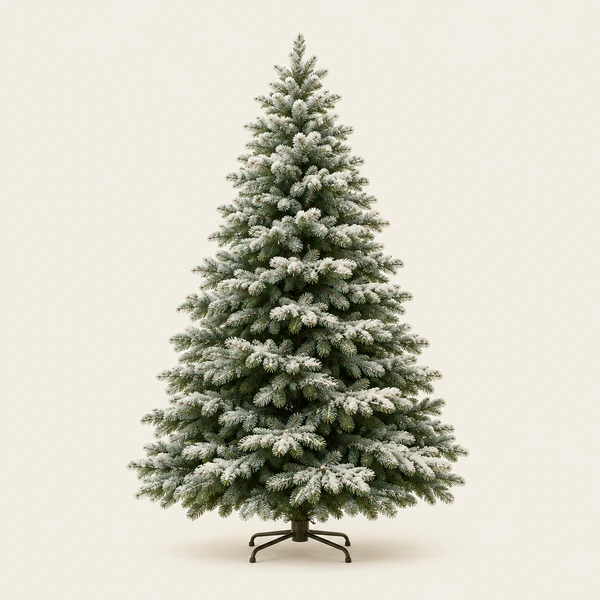
Lighting can change how green, blue or pale a tree looks. Use colour to choose a finish, then use shape and the material description to check what the needles are made of. On a snow-flocked tree, zoom in where some of the needle surface is visible through the coating. Ask for a clearer view or a material confirmation if the coating conceals the foliage.
Read the needle material for the exact product
Look for a specification labelled needle material or foliage material. PE stands for polyethylene and PVC for polyvinyl chloride. A mixed tree can use both. Some designs place moulded tips where they are visible and use a second material closer to the trunk. Ask how the materials are arranged when a listing refers to moulded foliage without specifying the parts of the crown it covers.
Write down the SKU, height, colour and branch construction. A similar product name can lead to a neighbouring size or finish. The SKU gives the retailer a precise product to check. Terms such as hinged branches and fixed branches describe how the branches attach. Find the foliage material in its own specification.
What to ask when the photographs leave a gap
Send the retailer the product link or SKU and mention the version you are considering. Ask whether the visible tips and the inner branches are moulded PE, cut PVC film or a mixture. If the materials vary across the crown, ask where each is used. Request a side close-up of the tip and a second picture close to the trunk so you can compare the answer with what you can see.
When comparing two trees, look at the same part of each tree in the same kind of light. This is especially useful when one listing shows detailed branch photos and the other relies on a full-length studio photograph. For a broader look at the materials themselves, see our guide to moulded PE and PVC Christmas trees.
Questions about identifying moulded PE online
Can I identify the whole tree from a single moulded tip?
The tip shows the material visible in that frame. Check the inner branches and the exact product’s specifications to find out what is used across the crown.
Can I estimate the percentage of PE from a photo?
A photo can show where visible materials are placed. Ask the store or manufacturer for the composition of the specific model if the proportions matter to your decision.
What if the tree is snow-flocked?
Look for an angle where individual needles are visible beneath the coating. Check the material listed for that colour and height, then ask the retailer to confirm it if the gallery leaves it unclear.
Which two photos should I ask for?
Request a clear side view of the branch tip and a view of the inner foliage near the trunk. Include the SKU, height and colour so the retailer knows which tree you mean.
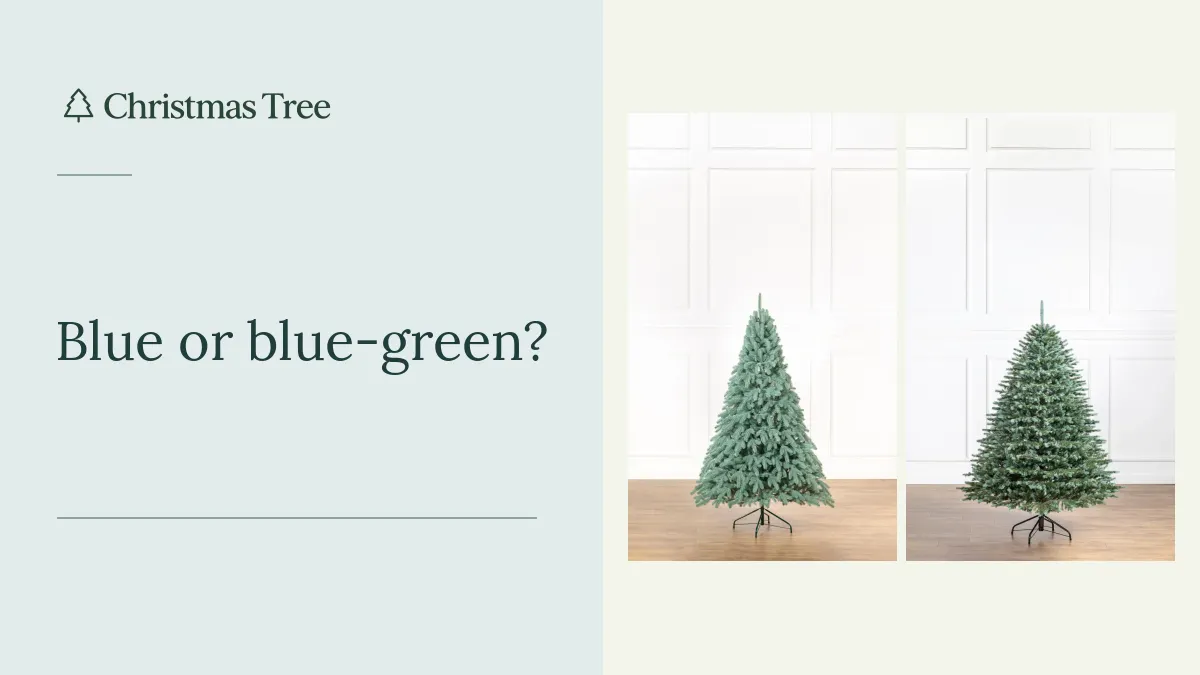
Blue or blue-green artificial Christmas tree? Three 1.8 m models compared
Blue Vienna, blue Lapland and blue-green Alaska share a height of 1.8 m but differ in width and packed weight. Compare their measurements,…
Read the story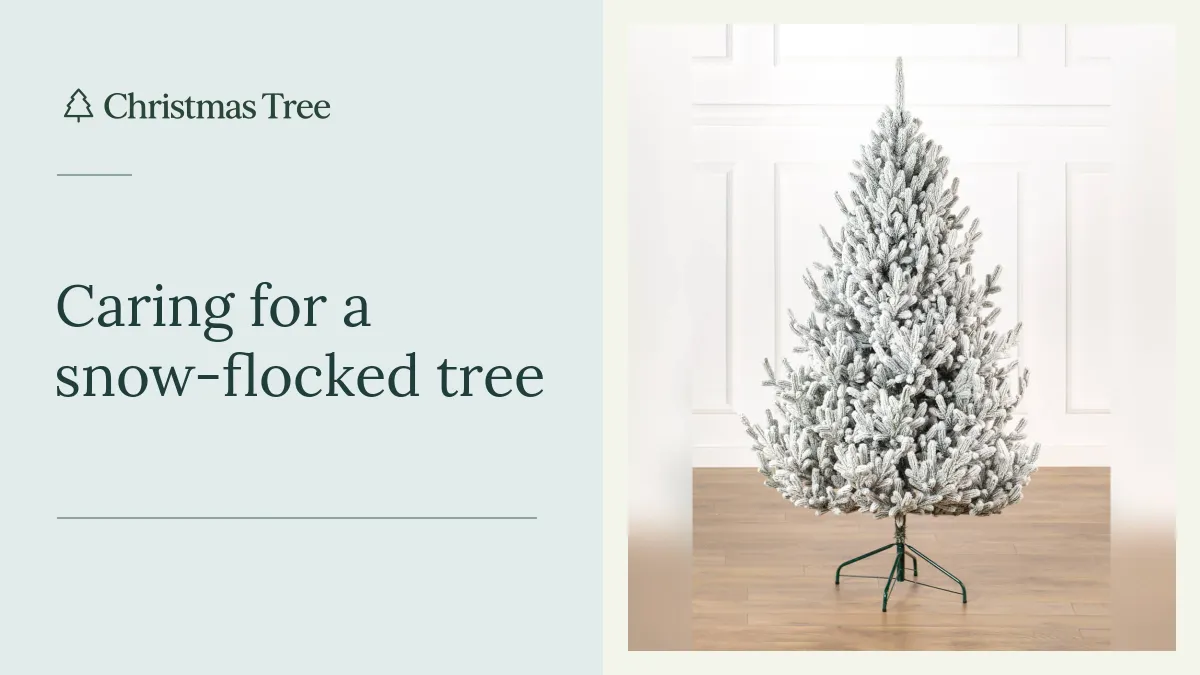
How to unbox, shape and store a snow-flocked artificial Christmas tree
A practical guide from opening the carton to packing up after Christmas, with two real size examples, a tier-by-tier shaping method and tips…
Read the story
How to order an artificial Christmas tree for international delivery
Choose a model, check its packed dimensions and send a delivery inquiry with your town and country. Christmas Tree confirms the arrangements…
Read the story
